💪 Training Load & Recovery
WOD Architect tracks three types of fatigue for a complete picture of your recovery.
Save at least 1 workout to see training load.
Global Physics
"unit">Power
0
W/kg
"unit">Total Work
0
kJ
"unit">Cardio Strain
0
MET-min
"unit">Force Bias
0
kg/kJ
Session Data
Relative Load
0 %1RM
Metabolic Cost
0 kcal
Understanding your results
▼
eRaw Efficiency
How much output you got per unit of cardiovascular strain (MET-min). For sessions with real mechanical work, it's kJ per MET-min — every unit of cardio strain, how much physical work did it buy you. For pure-cardio sessions (running or double-unders, nothing loaded), it's meters or reps per MET-min instead, since there's no mechanical work to divide by. Compare the same modality across sessions to see if you're getting more done for the same physiological cost — that's what "efficiency" means here.
Mechanical Power (W/kg)
Average power output relative to your bodyweight. Calculated as total mechanical work divided by session duration and mass. High = short intense session. Low = long aerobic session. Compare across sessions over time to track fitness gains.
Cardio Intensity (MET)
Metabolic equivalents — how hard your cardiovascular system worked, time-weighted across the whole session including the aerobic cost of non-cardio movements. Derived from heart rate when available, or your logged RPE otherwise. The %HRR figure beneath it is the same intensity expressed as a percentage of heart rate reserve. Only shown when cardio data is computable for the session.
Mechanical Work (kJ)
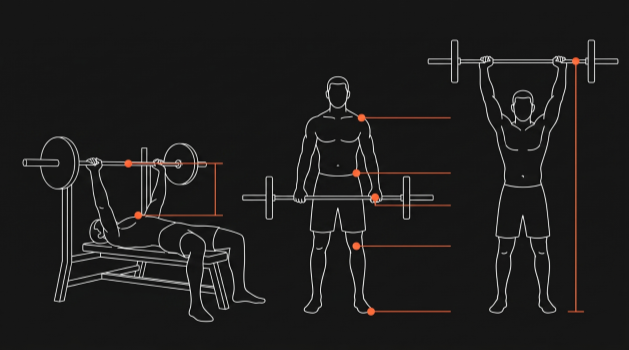
Total mechanical work performed across the whole session — Force × Distance, summed across every rep of every movement. Not divided by time or bodyweight, so longer or heavier sessions naturally show more. Useful for comparing total volume moved, separate from how intense or fast it was.
Cardio Strain (MET-min)
Total accumulated metabolic volume — cardio intensity carried across the whole session's duration, not just the average. Grows with time even at constant intensity, unlike the average MET figure above. The card also shows total estimated energy cost (kcal), combining mechanical work (barbell/bodyweight movements, ~22% muscular-efficiency factor), dedicated cardio (run/row/bike/ski, from your own pace data), and Overhead — the extra cardiovascular cost your RPE indicates beyond what those two already explain.
Force Bias (kg/kJ)
Measures stimulus type, not difficulty. Total barbell tonnage divided by mechanical work. High = strength or barbell dominant. Low = conditioning or bodyweight dominant.
Relative Loading
The heaviest barbell effort anywhere in the session, relative to your personal max — not an average across the whole workout, since a single near-maximal set matters regardless of what lighter work happened alongside it. Two athletes doing the same weight experience very different sessions if their 1RMs differ. 50–70% = conditioning zone. 70–85% = strength-endurance. 85%+ = near-maximal. Requires 1RM data in your Profile.
Technical Demand (1–5)
Rep-weighted average skill complexity across all movements you completed. 1 = basic bodyweight movements. 5 = elite Olympic lifts. High scores require full concentration — avoid technically complex sessions when heavily fatigued or sleep-deprived. Shown as the hero value on its own card, with Relative Loading (above) as the supporting detail.
Movement Pattern
Primary physical demand of the movements · Tap to learn more
Movement Pattern — Deep Dive
Tap to flip back
Calculation Audit Trail
☁️ Cloud Backup